Introduction: Role Models for Muslim Marriages in Islam
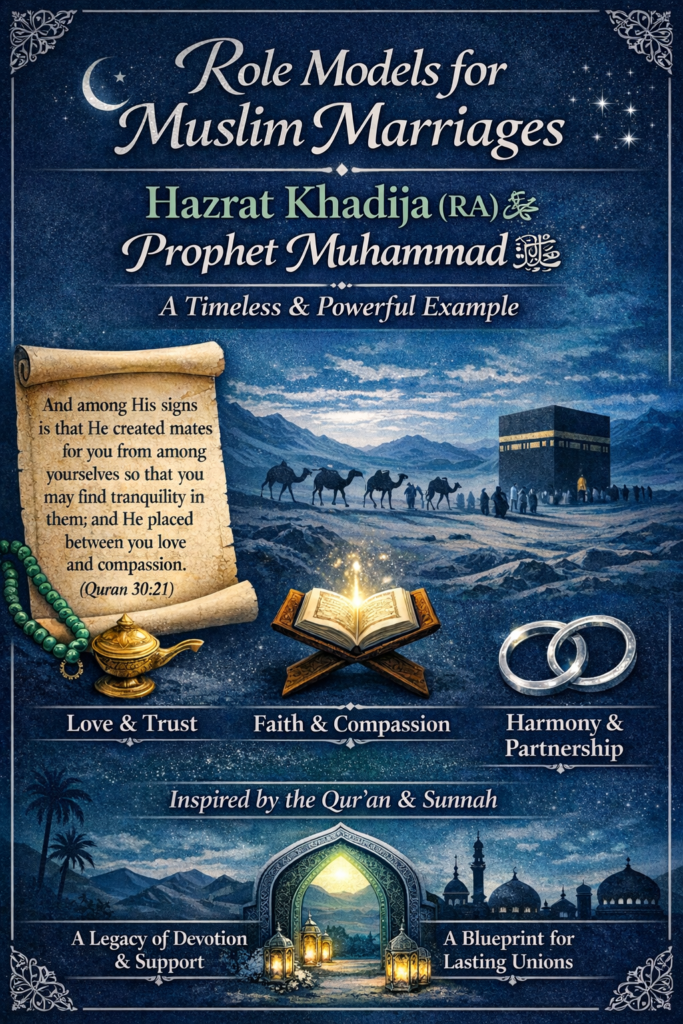
In Islam, marriage is not merely a social contract; it is a sacred bond rooted in faith, responsibility, compassion, and divine wisdom. Muslims across generations seek guidance from exemplary lives that embody these values in practice. Among all examples, none stands taller than the marriage of Hazrat Khadija (RA) and Prophet Muhammad ﷺ, who remain the ultimate Role Models for Muslim Marriages.
Their union reflects balance, mutual respect, emotional intelligence, spiritual depth, and unwavering trust in God. By studying their marriage, Muslims can learn how to build relationships grounded in harmony, dignity, and divine purpose.
Role Models for Muslim Marriages: Hazrat Khadija and Prophet Muhammad
For Muslims, the primary role models are Prophet Muhammad (peace be upon him) and his wife, Hazrat Khadija. Khadija was a successful merchant in the city of Mecca who sought to hire someone to manage her business, including overseeing caravans to distant lands. She heard much about Muhammad (who was not a prophet at that time) and decided to hire him.
Over the next few years, Khadija found Muhammad to be reliable, honest, dependable, and always truthful. Their relationship developed on a foundation of trust, respect, and mutual affection.
Something beautiful happened in human history: traditionally, it was the groom or his parents who proposed marriage. In this instance, Khadija took the initiative to propose, and Muhammad accepted. They got married and lived happily together until death parted them.
This moment is remarkable not only historically but also socially. It demonstrates Islam’s recognition of women’s agency, confidence, and wisdom. Hazrat Khadija’s proposal was rooted in character assessment, emotional maturity, and respect—values that modern Muslim marriages still strive to uphold.
Marriage as a Divine Sign and Source of Tranquility
God desires for people to marry and live in harmony. I would like to share a beautiful verse from the Quran;
وَمِنْ آيَاتِهِ أَنْ خَلَقَ لَكُم مِّنْ أَنفُسِكُمْ أَزْوَاجًا لِّتَسْكُنُوا إِلَيْهَا وَجَعَلَ بَيْنَكُم مَّوَدَّةً وَرَحْمَةً إِنَّ فِي ذَٰلِكَ لَآيَاتٍ لِّقَوْمٍ يَتَفَكَّرُونَ
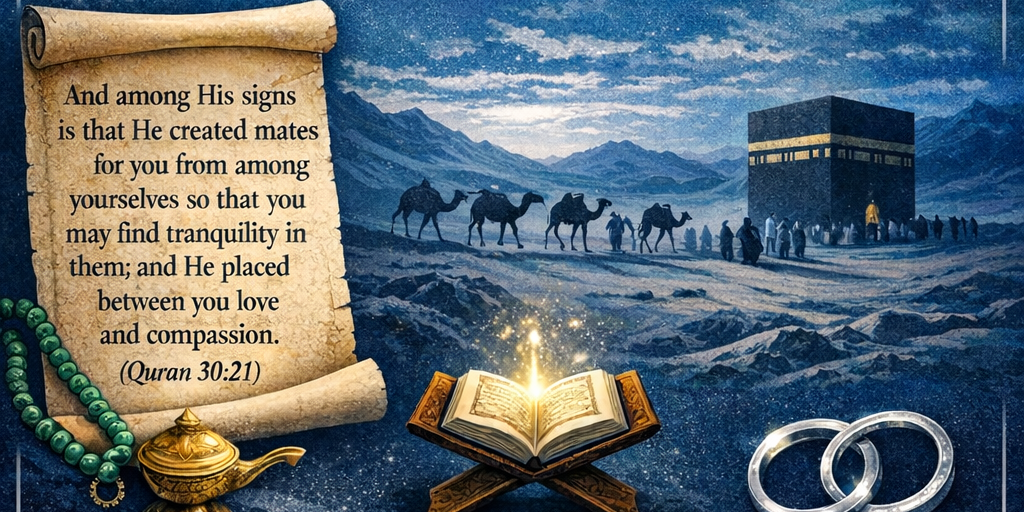
“And among His signs is that He created mates for you from among yourselves so that you may find tranquility in them; and He placed between you love and compassion. In these are signs for people who reflect.” (Quran 30:21).
My understanding is that God is the creator of the entire universe, and all of us on Earth today are part of His creation. He established the systems through which mothers conceive and give birth, nurturing their babies as they grow. Now, here we are, 8.3 billion of us. The concept of the oneness of God stems from the belief that the universe did not come into existence on its own; there was a singular cause that brought it into being. Whether through creation, evolution, or the Big Bang, the important fact is that we are here. You can call Cause, Causer, God, Creator, or any name; it is the same thing. Indeed, it is God’s will that brings two souls together.
This verse beautifully captures the essence of marriage in Islam—sukoon (tranquility), mawaddah (love), and rahmah (mercy). These elements were clearly embodied in the marriage of Hazrat Khadija and Prophet Muhammad ﷺ, making them enduring Role Models for Muslim Marriages.
Compatibility, Mutual Choice, and the Meaning of Nikah
Similarly, when the bride and groom first met, they found they were compatible in many aspects of life. Then they cultivated mutual respect and dignity, felt safe with one another, and eventually fell in love. One proposed, and the other gladly accepted. Today, this couple is celebrating one of the most significant milestones in their lives: their commitment to this union. Nikah signifies the union of two individuals in accordance with God’s will.
This understanding of Nikah emphasizes consent, compatibility, and divine intention. Marriage in Islam is not forced nor transactional—it is a conscious, willing partnership entered under God’s guidance.
Harmony in Creation: Lessons from Surah Ar-Rahman
God programmed the universe to function in perfect harmony. Consider the natural world, from the planets and plants to the human body; everything operates as designed. In Surah Ar-Rahman, it is said:
- 55:5 “At His behest, the sun and the moon run their appointed courses.”
- 55:6 “Before Him, the stars and the trees function as programmed.”
- 55:10 “And the earth has He spread out for all living beings.”
I urge everyone to reflect deeply on verses 1-13 of Surah Ar-Rahman; there is much meaning to be found in them for those who ponder.
Just as the universe thrives through balance and order, so too must marriages. When spouses align themselves with divine principles, harmony naturally follows.
Human Responsibility as Khalifa
God expects us to be managers, aka khalifa of our surroundings, restoring harmony among ourselves and all that exists around us.
Marriage is one of the most intimate spaces where this responsibility is tested and fulfilled. Spouses are entrusted with one another’s emotional, spiritual, and physical well-being. The marriage of Hazrat Khadija and Prophet Muhammad ﷺ exemplifies this stewardship at its highest level.
Hazrat Khadija: Strength Behind the Mission
As noted in the story of Khadija, it has been said, “There is a woman behind the success of every man.” Some historians have even described Khadija as “the rock upon which Muhammad built his faith.”
https://centerforpluralism.com/where-are-the-likes-of-bibi-khadija-muhammad-pbuh-and-the-righteous-ones/
Hazrat Khadija’s emotional, financial, and moral support during the earliest and most difficult years of Islam cannot be overstated. Her role reinforces the idea that successful marriages are built on partnership, sacrifice, and unwavering belief in one another.
Free Will, Guidance, and Living in Harmony
He has granted each of us free will among the approximately 8.3 billion people on Earth. He expects us to live in harmony with ourselves and with all that surrounds us—humans, animals, and the environment and he provides guidance in the Quran and the life of Prophet Muhammad (pbuh)
Through their marriage, Hazrat Khadija and Prophet Muhammad ﷺ demonstrate how free will, when guided by faith, leads to peace, stability, and purpose—making them eternal Role Models for Muslim Marriages.
Frequently Asked Questions (FAQs)
1. Why are Hazrat Khadija and Prophet Muhammad considered role models for Muslim marriages?
Because their marriage was built on trust, respect, love, consent, and unwavering faith in God.
2. What lesson does Hazrat Khadija’s proposal teach Muslims today?
It highlights women’s agency, confidence, and the importance of character over tradition.
3. How does Quran 30:21 relate to marriage?
It defines marriage as a source of tranquility, love, and mercy—core Islamic values.
4. What is the significance of Nikah in Islam?
Nikah represents a divinely guided union entered with mutual consent and responsibility.
5. How does Surah Ar-Rahman relate to marriage?
It teaches balance and harmony, principles essential for successful relationships.
6. What role did Hazrat Khadija play in the success of Islam?
She provided emotional, financial, and spiritual support during the Prophet’s mission.
Conclusion: A Timeless Blueprint for Muslim Marriages
The marriage of Hazrat Khadija (RA) and Prophet Muhammad ﷺ remains a timeless blueprint for love, leadership, faith, and harmony. As Role Models for Muslim Marriages, their lives remind us that successful unions are built on trust, compassion, divine guidance, and shared purpose.