The 65th Conversion to Islam marks another meaningful milestone in a journey that has unfolded steadily over the past two decades. Each conversion is unique. Each story is personal. And each declaration of faith carries a depth that words can hardly capture.
This time, it was Joe — a Catholic from Mexico — who reached out with a simple but profound request: he wanted to understand Islam, and if it were make sense to him, he wanted to embrace it sincerely.
There was no pressure. No incentives. No external persuasion. Just questions, reflection, and a sincere desire to seek truth.
And that is how it should always be.
A Conversation Rooted in Understanding
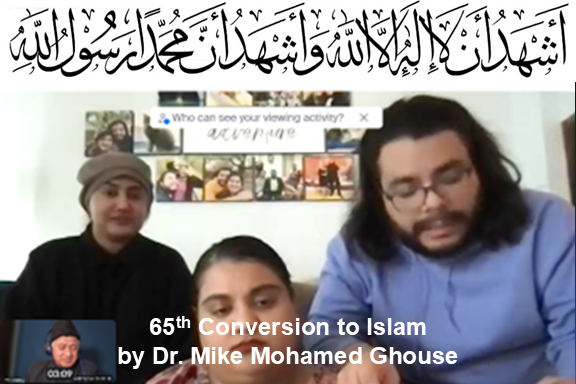
Joe contacted me expressing his interest in learning about Islam. We scheduled a Zoom conversation so I could understand his motivations clearly. When someone wishes to convert to Islam, I go through a thoughtful and rigorous process. I ask questions — and then I ask follow-up questions.
Why?
Because faith must be chosen freely. It cannot be inherited by confusion, nor adopted out of emotional impulse.
During our discussion, Joe shared that he had struggled for years to fully understand the faith he grew up with. Certain theological concepts felt difficult for him to reconcile intellectually. As he explored different religious perspectives, he found that Islam resonated with both his heart and mind.
He explained that Islam’s clarity about the Oneness of God appealed to him. Its simplicity. Its accountability. Its emphasis on peace and justice.
I asked him directly:
- Are you doing this for anyone?
- Has anyone offered you incentives?
- Are you trying to please someone?
- Are you under pressure?
His answer was firm and calm:
“No. I am choosing this for myself — for Allah.”
That sincerity is essential. A conversion must be voluntary, conscious, and intellectually grounded.
Beginning with Bismillah
As with all matters of importance, we begin with:

Bismillah Hir Rahman Nir Rahim
In the name of God, The Most Gracious, The Most Merciful.
This is not merely a phrase. It is a mindset. It centers the heart before the ceremony begins.
Joe was informed clearly of what Islam entails — belief in one God – a singular cause for the universe to come into being, accountability of actions, compassion toward all creation, and living as an exemplary citizen.
Only after ensuring his understanding did, we proceed.
Surah Al-Fatiha – The Foundation of Faith
The ceremony begins with the recitation of Surah Al-Fatiha, the Opening chapter of the Quran. It is the essence of Islamic belief, encapsulating gratitude, mercy, guidance, and devotion.
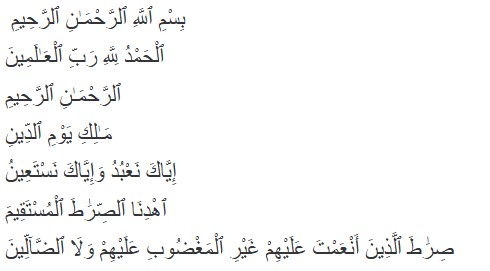
Translation:
In the name of God, The Most Gracious, The Most Merciful
All praise is due to God, the Lord of the universe,
The Most Compassionate, The Most Merciful,
Master of the Day of Judgment,
You alone we worship, and You alone we ask for help.
Guide us to the straight path.
The path of those upon whom You have bestowed blessings.
This chapter reminds us that Islam is rooted in mercy, guidance, and conscious devotion.
The Shahadah – The Declaration That Changes Everything
The moment arrives.
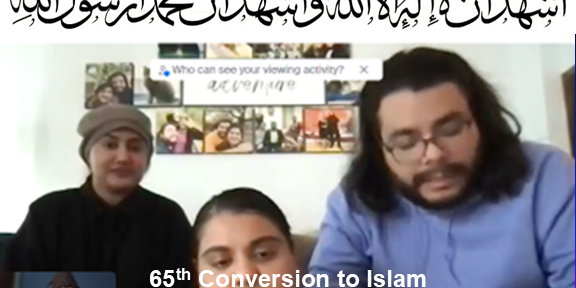
Joe repeated the testimony of faith:
“I testify that there is no God but Allah, and I further testify that Muhammad – peace be upon him – is the messenger of Allah.”
In Arabic:

Ashhadu an la ilaha illa Allah, wa ashhadu anna Muhammadan rasool Allah.
It is recited three times — not mechanically, but reflectively.
With those words, Joe became a Muslim.
There was no dramatic spectacle. No applause. Just peace.
Surah Al-Ikhlas – Affirming Divine Unity
Following the Shahadah, Surah Al-Ikhlas is recited three times. This chapter is a profound declaration of pure monotheism:
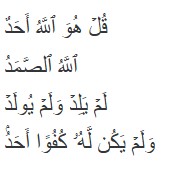
“He is God, the One.
God, the Eternal Refuge.
He neither begets nor is born.
And there is nothing comparable to Him.”
Its message is simple and absolute: God is One – he is the singular cause or causer of the universe.
For many converts, including Joe, this clarity is deeply liberating.
The Essence of Islam
Islam means peace — peace within oneself and peace with others.
The universe operates in divine order. Planets move in harmony. Nature follows its programming. Humans, however, are given free will.
That free will can cause conflict — or it can build harmony.
Islam teaches that the purpose of life is to live responsibly, create balance, and cultivate peace in families, communities, and nations.
The goal is universal harmony.
Who Is a Muslim?
At its core, a Muslim is someone who:
- Believes in One Creator (Allah)
- Accepts accountability for actions
- Cares for fellow humans, animals, and the environment
The Quran (2:62) emphasizes that righteousness, faith in God, and accountability define true submission.
Islam is not about ethnicity or culture. It is about conscious alignment with divine guidance.
Responsibilities After Conversion
After the ceremony, I always explain the core responsibilities of a Muslim:
1. Be Grateful
Recognize blessings — health, family, sustenance, companionship. Gratitude brings balance.
2. Be Accountable
No one escapes accountability. Live a life free of regret.
3. Show Compassion
Care for all of God’s creation — humans, animals, and nature.
4. Be Al-Amin
An exemplary citizen. Truthful. Trustworthy. Just.
5. Promote Peace
Islam’s mission is social cohesion and security for all.
6. Think Universally
God is Rabbul Aalameen — Lord of the Universe. Muhammad (pbuh) is a mercy to mankind, and as followers, we must be beneficial to all humanity.
Certification and Recognition
As with previous conversions, signatures will follow and an official certificate will be issued. Similar certifications have been accepted internationally, including by foreign embassies.
Documentation matters — but sincerity matters more.
A Milestone in a Continuing Journey
The 65th conversion to Islam is not just a number.
It represents:
- 20 years of consistent service (different time line than Interfaith Marriages)
- Dozens of lives transformed
- Hundreds of questions answered
- Countless conversations grounded in respect
Each individual who embraces Islam does so because it appeals to their intellect and conscience.
Joe’s journey is a reminder that faith is not about coercion — it is about clarity.
And when someone says the Shahadah with full understanding and free will, it is a moment of profound dignity.
If it is not common sense, then it is not Islam – www.WorldMuslimCongress.org
Mubarak and Congratulations, Joe.
May your journey be filled with peace, purpose, and harmony.
Background of Dr. Mike Mohamed Ghouse
https://interfaithmarriages.org/muslim-background-of-dr-mike-mohamed-ghouse/
Dr. Ghouse is the President and founder of the Center for Pluralism and director of the World Muslim Congress. He is an Interfaith Wedding Officiant for InterfaithMarriages.org and a Muslim Wedding Officiant. He is a Muslim, Pluralist, activist, speaker, author, and social scientist. More on Google